
In the first episode, we saw where hotels lose control to OTAs (Online Travel Agencies). In the second, we looked at how expensive a single booking can actually be.
Now a natural question arises:
If you have several sales channels, how do you manage them without chasing each one separately?
This is where the Channel Manager comes in.
What Is a Channel Manager?
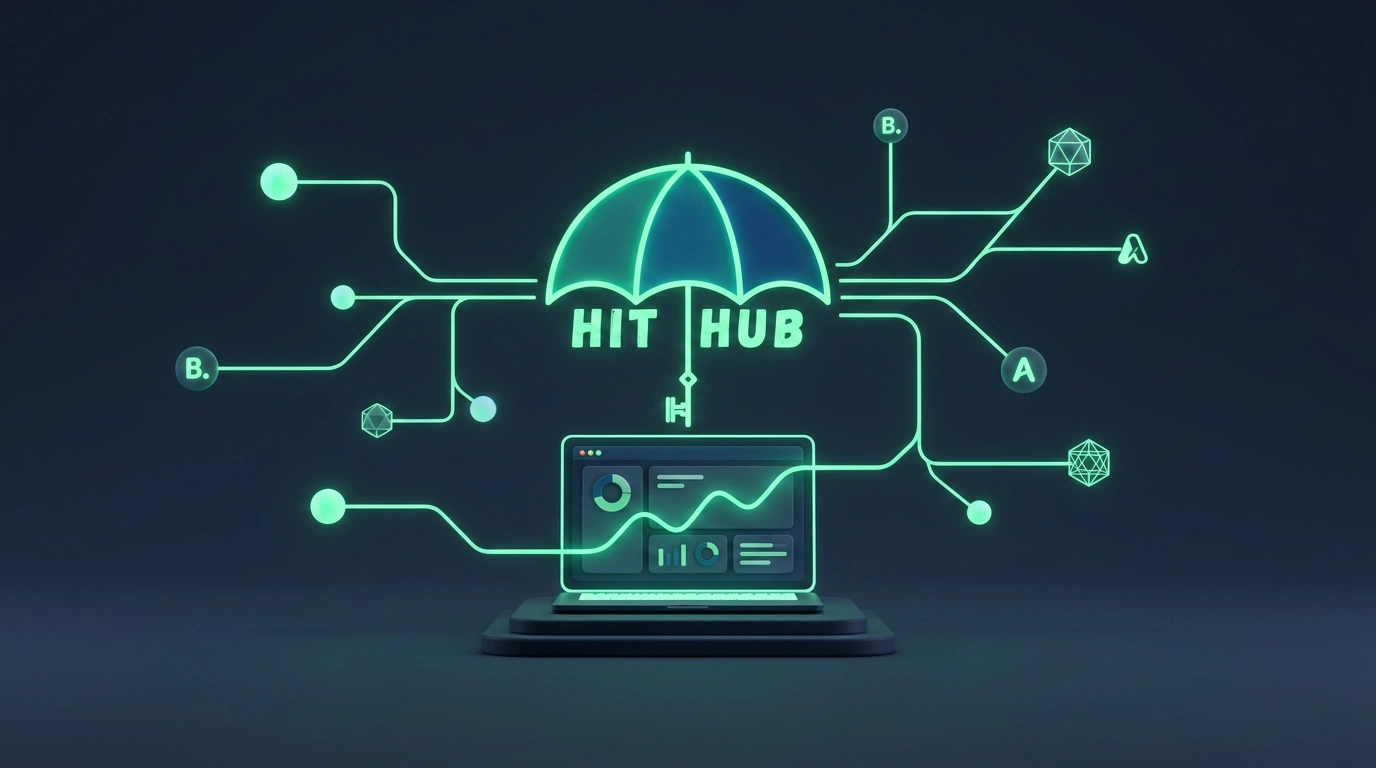
Simply put, a Channel Manager is a system that connects a hotel's different sales channels to each other.
Booking.com, Expedia, Airbnb, Agoda, your own Booking Engine (the reservation system on your website), and other platforms all operate as one connected system.
You change a price or availability in one place - and the system automatically pushes that change to every connected channel.
The same happens with a booking:
A booking comes in → the system automatically updates availability → the change is instantly reflected across every other channel.
In other words, you no longer have to enter the same information by hand, over and over.
What Does This Change in Practice?
1 - You Stop Managing Every Channel Separately
Today you might have Booking.com, Expedia, Airbnb, and your own website. If you manage them by hand, a single change has to be repeated in several different places:
- Price changed? - You have to update it on every channel.
- Room sold? - You have to reduce availability everywhere.
- Running a promotion? - You have to log into several systems again and make the change.
With a Channel Manager, the core change is made in one place and automatically propagates to every connected channel.
The result: less manual work and a lower chance of error.
2 - One Booking Instantly Notifies Every Other Channel
Imagine your hotel has exactly one room left. A guest books it through Booking.com. The system receives the booking and instantly updates room availability across every other connected channel.
This matters most when demand is high and bookings are coming in from several platforms at once.
One booking → one automatic update → every connected channel.
This doesn't mean technology automatically eliminates every human error - but it significantly reduces the risk (such as double bookings, i.e. overbooking) that comes with manual management.
3 - Changing a Price No Longer Means Logging In Ten Times
The season changes. You want to raise tomorrow's rate. Or rooms are filling up fast and you need to adjust pricing. If everything is managed manually, the same change has to be entered separately on multiple channels.
With a Channel Manager, pricing and availability management is fully centralized. This matters most when a hotel has multiple room types, different rate plans, and several sales channels.
4 - Your Own Website Runs on the Same System
Here's the most important part. A Channel Manager isn't just a tool for managing OTAs. A properly built technology ecosystem connects:
PMS ↔ Channel Manager ↔ OTAs ↔ Booking Engine
In other words, room availability, rates, and bookings all move through one unified network. Let's clearly define these four components, which together form a far more effective distribution system:
- PMS manages the hotel's internal operations and guest data.
- Channel Manager is the system that connects these channels and exchanges information instantly.
- OTA (e.g. Booking.com, Expedia) is an external sales channel.
- Booking Engine is the way you receive direct, commission-free bookings from your own website.
5 - Your Cost No Longer Scales With Every Extra Booking
Here's another key financial difference. An OTA's commission is directly tied to your sales volume - the more bookings you get through these platforms, the more commission you pay them. A Channel Manager's cost, on the other hand, is typically a fixed monthly subscription.
In other words:
- With an OTA - you pay every time you receive a specific sale (as commission).
- With a Channel Manager - you pay a fixed fee to use the system, regardless of how many bookings come in.
That's why you shouldn't judge a Channel Manager's value by asking only, "How much does it cost per month?" The better question is:
"How much does it cost me not to have it?"
One overbooking. One incorrectly updated price. Several hours lost to daily manual work. One lost direct booking.
Small losses like these, accumulating day after day, turn into a genuinely large real cost for the business.
💡 HIT Hub Insight
For Georgian hotels, we believe the main value of a Channel Manager isn't that it's "one more piece of software" - it's that it hands control back to you.
OTAs are essential sales channels, and turning them off isn't the answer. But it's just as wrong for each channel to run on its own, with staff checking prices, availability, and bookings independently, every single day.
A properly built technology architecture works differently: the PMS runs the hotel. The Channel Manager connects the sales channels. The Booking Engine captures direct bookings. And people manage the business - not the screens.
In Summary
A Channel Manager's main value isn't that it "has a lot of features." Its real benefit is that you stop doing the same task in ten different places.
And that's exactly where the key difference lies:
- Being on an OTA - is visibility.
- A Channel Manager - is a control tool.
- A Booking Engine - is your direct, commission-free sales channel.
And you manage all of it from one unified, properly configured system.
In the next episode, we'll discuss exactly that: how to split your sales between OTAs and direct bookings so that you use OTA visibility effectively - without becoming entirely dependent on it.
“Systems don't change a business. People change a business, with the right technology.” - HIT-Thinking